Type: Papers
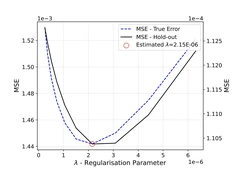
Single Image Blind Parameter Recovery
I developed a selection procedure for image formation and solver hyperparameters for image restoration tasks, which removes the need for hand tuning. I provide a proof that the estimator is unbiased and derive estimator variance, confidence bounds and provide guidance on practical usage.
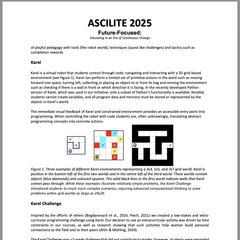
Empowering women to code: Playful learning with Karel
This paper presented at ASCILITE 2025 discusses how our Karel initiative is empowering women in programming.
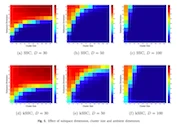
Efficient Sparse Subspace Clustering by Nearest Neighbour Filtering
KNN filtering reduces computation requirements for Subspace Clustering. Theorertical justification is provided and empirically validated. View on Google Scholar. I was responsible for conceptualization, methodology, investigation, software, validation, writing - original draft.
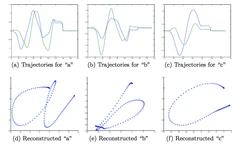
Robust Functional Manifold Clustering
We extend subspace clustering to data that represents functions and curves. View on Google Scholar.
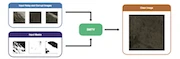
Selective Multi-Source Total Variation Image Restoration
We show that fusing multiple noisy images under a total variation penalty improves reconstruction. This idea can be selectively applied to individual pixels of each source image in the case of corrupted sections of images. View on Google Scholar.
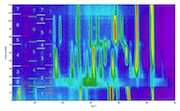
Low Rank Sequential Subspace Clustering
We show that forcing the affinity matrix of SpatSC to be low-rank improves performance. View on Google Scholar.
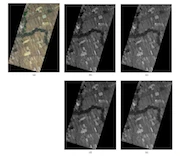
Affinity Pansharpening and Image Fusion
We show that the pixel affinity from a high resolution image can be used to enhance low resolution images of the same scene. This technique is general enough to support fusion between any image types. View on Google Scholar.
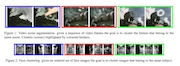
Subspace Clustering for Sequential Data
We show that subspace clustering on sequential data can be dramatically improved by incorporating spatial constraints. View on Google Scholar.
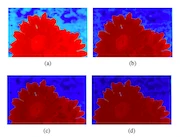
Image Matting for Sparse User Input by Iterative Refinement
We show that iteratively refining an alpha matte can lead to impressive results with very sparse labels. View on Google Scholar.
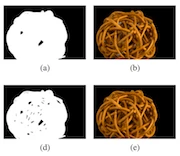
Natural Image Matting with Total Variation Regularisation
We show that total variation regularisation improves alpha mattes. View on Google Scholar.